SURVEY OF AFRO-ASIAN LITERATURE
- Michael Motas

- Sep 14, 2020
- 28 min read
Updated: Nov 1, 2020
Course Description: This course surveys selected literary texts from Asia and Africa, particularly India, China, Japan, the countries in the Southeast region in Asia, and the African nations south of the Sahara along with their socio-historical, philosophical, and literary underpinnings.
LESSON 1: CHINESE LITERATURE
This chapter talks about Chinese literary works that include fiction, philosophical and religious works, poetry, and scientific writings. The dynastic eras frame the history of Chinese literature and are examined one by one. The grammar of the written Classical Language is different than the spoken languages of the past two thousand years ago.

Background of the Chinese Literature
I have comprehend that the history of Chinese literature is a very complex history but with the presence of a step by step process of development ruled by some great Chinese emperors. Every dynasty has the capacity to change the way ancient Chinese people live in a particular way or their own culture and with this, they are thinking for improvements and for the betterment of their kingdoms. On the other hand, the way the dynasties were told, the contents really revealed their own practices, activities, works, and beliefs. In which somehow up until now those culture they have practiced before are still present in today’s time.
History
One of the interesting things about Chinese literature is that much of the serious literature was composed using a formal written language that is called Classical Chinese.
This written language was used by people of many different ethnic groups and countries during the Zhou, Qin and Han eras spanning 1050 BC to 220 AD. After the Han Dynasty, the written language evolved as the spoken languages changed, but most writers still based their compositions on Classical Chinese
I can really say that Chinese government and its people were really powerful before and in today's time because they have their own resources to use and mostly, they were colonizers domestically and internationally from the past. While this may be true, they colonized some parts of the countries located in Asia and Europe and as far as I am concerned the reason why Chinese people invaded other places it is because of colonialism. In which, colonialism is where the policy of a country seeking to extend or retain its authority over other people or territories, generally with the aim of economic dominance. In the process of colonization, colonizers may impose their own religion, economics, and other cultural practices on indigenous people so that they will become more powerful.
This is how I comprehend the way Chinese leaders impose their law and power to their subordinates and runs their government. I highly appreciate their culture and the way the great authors made their literary works and influences other people also. It gives moral lessons to the readers of tomorrow and somehow it contains valuable lessons to people.

A Country Boy Quits School
The story is about a poor Chinese family which has a boy of an early age, toiling every day for a living just to help augmenting the other basic needs of their family. The family is forced to send this boy to school following the City Ordinance, to cite: An official proclamation had been issued in the city to the effect that unless a boy over six years of age is sent to school, some adult in the family will go to jail. Good thing there is a law that compels this boy to study so that it could have been a chance for him to acquire knowledge too but sooner or later he misses that mere chance due to the intervention of his family’s poor insight.
I learned that education is very important to us so that we can improve and do better with our lives. If we are well-equipped, we could be flexible enough to all the changes around us. Education is what we become in the future. However, to those people who are not fortunate enough to have a chance to go to school due to financial reason or might be the government is not very particular on the matter pertaining to education. It is sad to know that these people are not able to cope up well with what is happening around them. Like the family in this story, they are incapable to do things to make their lives more comfortable. They lack of education because China at that time was more rigid with its communist doctrine. In order to grip its people especially the masses, it is unwise for the government to introduce education to them because rebels come from the rank of educated bracket of society.
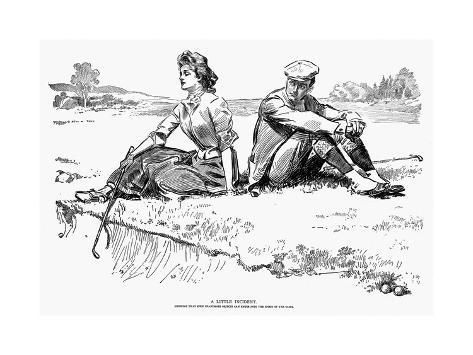
A Little Incident by Lu Xun
When the author came up with his realization after the incident, he was moved by the act of kindness of the rickshaw puller. He knew deep inside there lies a man like that of the rickshaw puller that is very kind and tender-hearted but just slept because of the ungraced he faced throughout the years of political and social matters governing their locale. The "I" himself is a symbol. He is somewhat referred to as someone who holds a high position, a general or government official perhaps. I bet he symbolizes supremacy in the society. In which he reflects those who are above the social pyramid where masses are placed down under. Also, in countries like China, that time, men are considered superior to women. The "I" could have been the epitome of power and position for the story.
Some photos of a rickshaw man in China
Japanese Literature
Japanese literature traces its beginnings to oral traditions that were first recorded in written form in the early eighth century after a writing system was introduced from China. The Kojiki (Record of Ancient Matters) and Nihon shoki (Chronicle of Japan) were completed in 712 and 720, respectively, as government projects. The former is an anthology of myths, legends, and other stories, while the latter is a chronological record of history. The Fudoki (Records of Wind and Earth), compiled by provincial officials beginning in 713, describe the history, geography, products, and folklore of the various provinces.

Japanese literature traces its beginnings to oral traditions that were first recorded in written form in the early eighth century after a writing system was introduced from China. In the early years, Japanese people uses classical Chinese language in their writing. And as what we can observed most of the Japanese people of today, they are known to be disciplined, and family-oriented. They are very responsible way back hundred years ago and the Japanese literature were deemed to be timeless.
Japanese literature is composed of three periods and they are as follows; the ancient period, the classical period and the medieval period. As the Japanese literature were presented it consists of genres like horror, crime stories, pornography, comedy and so forth in which it often accompanied by colorful woodcut printing.
HAIKU
Haiku is a Japanese poem of seventeen syllables, in three lines of five, seven, and five, traditionally evoking images of the natural world. Thus, haiku is a poem in English written in the form of a haiku.
Some examples of Haiku in the English form
In the second thought, haiku is a Japanese poetry form that uses a few words to describe a captivating moment in a beautiful way. It is somehow referring to a unique poem in which it contains insights and that requires deeper understanding. Haikus are always short and simple they're meant to be read in one breath. Traditionally, they only have three lines.
THE THIEF WHO BECAME A DISCIPLE
The Thief Who Became a Disciple" is about a man named Shichiri Kojun who was reciting sutras and a theif with a sharp sword entered. The theif told Shichiri to give him all his money, and Shichiri told him that he could take it, but leave him some so he could pay his taxes.

Afro-Asian Literature: The Thief Who Became A Disciple
In this particular Japanese story, I have learned that every people deserve a second chance. A second chance to change and live with their best life. Despite the idea that we have some bad sides as well, the most essential part is we intended to show who we are and what we are as a person. We show our true colors to the people who surrounds us and that makes us happy and vulnerable at the same time. While this may be true, having a genuine heart and good personality really presents of being a good person. I’ve reckoned that your past, no matter how bad it was, does not define your future. The choices and actions you make today will ultimately define who you will eventually become. Make the decision to learn from your past and apply it in the present so that you can live the life that you were meant to live. We deserve it!
PERSIAN LITERATURE
Persian literature is the jewel in the crown of Persian culture. It has profoundly influenced the literatures of Ottoman Turkey, Muslim India and Turkic Central Asia and been a source of inspiration for Goethe, Emerson, Matthew Arnold and Jorge Luis Borges among others. Yet Persian literature has never received the attention it truly deserves.

Old Persian Literature
During this literature, it spans two and a half millennia, though much of the pre-Islamic material has been lost. Its sources have been within historical Persia including present day Iran as well as regions of Central Asia where the Persian language has been the national language through history. The literature of Persia is among the oldest in the world, spanning thousands of years, and has influenced the literary works of many other cultures. As noted on this literature, poetry also informs Persian prose histories, religious commentary, criticism, and biographies, as well as translations of works from other languages.
The poetic form, however what one would understand as poetry was always considered the highest form of expression and reached its height in the 12th-15th centuries CE through the works of Persian poets drawing on the traditions and symbols of Sufism (the mystical approach to the practice of Islam) and the power of Divine and human love to give meaning to one’s life.
These are the examples of Persian literatures
Rumi – Love Poems
Rumi rarely wrote down his own poetry. The six books of poetry in the Mathnawi were written entirely by Rumi, who would compose and dictate the poetry, and his student Husam Chulabi, who would write and edit it.

Divan-e Shams
In this particular love poem, I have understood the way before Persian people really wrote their love confession through the use of writing. If someone wrote us related to genuine love, we really appreciate those people and their existence because they are unique and fantastic at the same time.
Another thing is we should stop acting so small. self-doubt is one of the major reasons we don’t fulfill our dreams. We think “how” while the universe is already preparing to make the dream a reality. While this may be true, we stay stuck in the smallness of the how. Our job is not to worry about the how, our job is to dream big and believe without a shadow of doubt that it will materialize.
As what Rumi tells in the text: “Words are a pretext. It is the inner bond that draws one person to another, not words”. I have come up on the idea that it’s the inner bonding that matters. On focusing on the outer cover of ourselves, we conveniently forget that it’s not what is on the outside that makes memories and have endless happiness, it’s the feeling, the bond that one smile can create that literally lasts a lifetime.
These are the examples of a poem written by Rumi
Sohrab and Rustum
Sohrab and Rustum is a narrative poem with strong tragic themes first published in 1853 by Matthew Arnold. The poem retells a famous episode from Ferdowsi's Persian epic Shahnameh relating how the great warrior Rustum unknowingly slew his long-lost son Sohrab in single combat.

The tragic event of Sohrab and Rustum
In this literature, I have understood that we shouldn’t take our pride too high. Rustum has so much pride in himself that he forgets about humility. If He had humbled himself when Sohrab asked if he is Rustum, hence he might not kill his son. With pride, there are many complex situations, curses and conflict but with humility, there comes many abundant blessings that humanity beholds. We shouldn’t forget that if we put too much pride to ourselves, it will shred us internally and ruins our relationship to our closest friends and family members. Thus, humble people don't lack pride in their accomplishments rather, it is knowing the time, place, and tone with which to share their strengths with the world.
As humans, we really need full time humility for inner well-being. In which, becoming frustrated and angry at failure comes with any struggle in life. It’s important we understand humility to be able to better navigate those losses and pick ourselves up after the falls. It might sound counter-intuitive, but the humbler you are the more resilient you can be. If you can admit and recognize your part in the downfall you can work towards changing it. Therefore, if you combine humility with your passion in life, you’ll rise to the top and overcome dilemma’s.

Sohrab & Rustum
ARABIAN LITERATURE
The English language, unlike many other European languages, uses several adjectives—Arab, Arabic, and Arabian—to depict phenomena of the particular region and people that are linked to the notion of “Arab,” a word that has the original sense of “nomad.” For the purposes of this article, the term Arabic will be used to refer only to the Arabic language.

Arabian Literature
In this literature, I have learned that most of the Arabian people before they base their cultures and beliefs through their written works. The Quran, which refers to the name of the Islam Bible most of their literary works focuses and inspired with the teachings of Allah. On the other hand, this Arabian literature is consisting of four historical periods, and they are as follows; the Umayyad Period, the Abbasid Empire, the Modern Period, and the Golden Age of Arabic Prose.
Both Umayyad Periods and Abbasid Empire, they base their literary works through the Arabian cultures and beliefs in which it influences their day to day living. Also, the Modern Period focuses on societal issues in which somehow it addresses the way people see complex things in the society. Arabian people love to read “The Thousands and One Nights” wherein, it consists of different literary works with life lessons in it and actually they read stories before going to sleep at night. Through this, Arabian literature serves as the bases of their culture that can pass from one generation to another. The prolific ideas and concepts that can be seen on different literary works of Arabian strengthens their faith to Allah because of the influences of their bible and as well as the influences of the ancient Arabian people.
Some of the illustrations of Arabian Literature
THE FOOD PARADISE

In this particular story, it tells us a lesson that we must be contented and thankful of what God gives us everyday. We should not be lazy and just rely things on Him instead we must work hard and do our responsibilities so that God will give us what we deserve.
The story serves as a mind opener in the way that it tells us hope and faith towards our God. We must always put our trust to our Almighty God because when everything is at lost, God is the only one we can cling on. Whatever happens, it happens for a purpose. He will surely never leave us because He unconditionally love us. We must give thanks to all the blessings we received and pray for the guidance in the path we are taking.
THE ENCHANTED HORSE

In the story, the Enchanted Horse I have learned that love and revenge really takes time to people, I mean, they carry huge feeling of hatred and affection in which it can make people’s lives happy and at the same time It is sad. As what I have learned from the story is that whomever we love, we should fight for it and take risk for everything that we do, even if it hurts us and/or breaks us. When you love someone, you do everything you can just to make things work.
Love is a word that is meant to describe a strong bond one feels toward another. We, each of us, define it by terms that we can live by and with. It is a mistake to define it by external conditions. Having said that, one needn't do anything for love, but feel it. And if a bond is to be forged with goals one can share this feeling in the hope that it is reciprocated with the same strength, and that the bond proves better than not in being pursued.
SINGAPORE LITERATURE
For many years, the readers in Singapore were much more critical of their homegrown talents than writers from abroad. The result was that few local authors could flourish and many of the literary works coming out of Singapore were written in imitation of the narrative voices popular in the West.

Now as the literary scene in Singapore expands on the back of initiatives like the Singapore Writer’s Festival and the Singapore Book Awards, local and international readers have gained an ultimate appreciation for the unique voices behind Singaporean Literature.
THE OLD MAN, HIS SON AND THEIR BIKE

In the story about "The Old Man, His Son and His Bike" I have comprehend that If you try to please others to please yourself you will fail. Even life is very confusing and at the same sad, it will really break us emotionally and physically. Sometimes we try to show the world that we are flawless in hopes that we will be liked and accepted by everyone, but we can’t please everyone and we shouldn’t try doing it. The enchantress of us lies in our vulnerability, our complex emotions, our status and our authentic imperfections. When we embrace who we are and what we are as a person and decide to be authentic, instead of who we think others want us to be, we open ourselves up to real relationships, real friendships, real happiness, and real success.
On the other hand, do not lose yourself in your search for acceptance by others. Instead, walk your path confidently and don’t expect anyone else to understand your journey, especially if they do not know and have not been exactly where you are going. You have to take the steps one by one that are right for you because no one else walks in your shoes. Let others take you as who you are, or not at all. Speak your side even if it makes you comfortable and even if your voice shakes. By being true to yourself, you put something breathtaking into the world that was not there before.
TO GRANDMA

In this particular letter and/or message, I have learned that we should not let our pride takes on a higher spot, instead we should express and show our genuine love to our grandparents because life is just a temporary thing in this world. I reckon our grandparents are a valuable resource for the reason that they have so many stories to tell and experiences from their own lives to share before. Often times children will listen to grandparents even when they are not listening to their parents or other adults.
Even if we are getting old already, we should not forget that our grandparents are also aging. We should not let our silence be just silence, we should break that wall to prevent from any regrets. Time will come, God will embrace them and so we should do our part before anything else will happen. Whether you’ve been lucky enough to have grown up with your grandparents’ influence or only felt their love through long distance phone and/or video calls, it’s clear that most grandparents have a generous amount of wisdom, advice, love and support to offer the ones they love. It can be easy to dismiss their sometimes seemingly outdated ways to doing things, their stories about times passed or their old fashioned ideas of how you should get your haircut and nails done, but oftentimes we miss the wealth of knowledge and under appreciate their unconditional love.
There are a lot of ways to show to them that we adore them, in a way that we can cook them for lunch, visit them at their home, take them to a vacation, ask them what they'd like to do, make them something and so on. Of course, not all of us have the relationship we’d like with our grandparents, perhaps because we’ve lost touch, because of family tension or because of a difference of opinion but we must instill to our minds that without them, we are also nothing into this world. You should love them unconditionally and that's the only thing that matters.
KOREAN LITERATURE
Korea has had its own language for several thousand years had passed. It has had a writing system only since the mid-15th century, when Hangul was invented. However, before the 20th century, much of Korean literatures were written in Chinese character rather than in Korean, even after the invention of Hangul. In general, literature written in Korea falls into three categories: works written in the early transcription systems, those written in Hangul, and those written in Chinese.

There are traditional forms and genres that can be found in Korean literature and they are as follows: hyangga (native songs); pyŏlgok (special songs), or changga (long poems); sijo (current melodies); and kasa (verses). Other poetic forms that flourished briefly include the kyŏnggi style in the 14th and 15th centuries and the akchang (words for songs) in the 15th century. These genres were somehow gave a lot of contributions in shaping the Korean language in this modern times.
SIJO POEMS

If we are talking about Sijo poems, it is a Korean verse form related to haiku and tanka and comprised of three lines of 14-16 syllables each, for a total of 44-46 syllables. Each line contains a pause near the middle, similar to a caesura, though the break need not be metrical. I also made a sijo poem, and this poem is somehow dedicated to my dead love that was buried long time ago. And let me share this to you:
As day defeats the night, your voice I hear sounds gently and smoothly
Could it be real, angels tumble from heaven to chant love songs?
I rise and run to chase the affection, too bad, it fades away.
In this particular poem, I express myself through these three lines. Though they are a bit lacking but I think its better to be in that way because sometimes love is tough and when life gives you lemons, make lemonade. Lemons suggest sourness or difficulty in life. Making lemonade is turning them into something positive or desirable and I reckon that's how life is, in which it is full of struggles and painful experiences but at the end of it everything will be just fine in God's precious time.
THE VANITY OF THE RAT

In this particular story, it talks about one of the cultures in Korea that can be seen mostly on their dramas and this story is about a family who has decided to let their daughter to be married already. Her father wants a strong man that can protect him in everything that he will do. Thinking of that these story gives me a moral lesson that we must not look in the physical appearance but in the inside trait.
There is a common saying that, “Beauty lies in the eyes of the beholder”. It ravishingly explains that it depends upon the person with whom you are dealing with whether you look attractive to them or not. On the contrary, not all people will judge you by the looks you possess, some will still consider you beautiful, even if you are not, because of the personality you possess to them. I must say that a person should focus on and work on his personality traits. He/She should make sure that his/her behavior and attitude are not hurting anyone and people consider him/her a wise and gentle person. Whatever beautifulness and smartness you try to maneuver to people, but at the end of the day, if you don’t get moral pleasure and peace of mind, that you have done right to all those you met throughout the day, you won’t be considered a beautiful person. And this moral pleasure comes from nowhere other than people’s blessings.
So, it doesn’t matter at all whether you are good looking or not, you have to be well-behaved and possess inner beauty and you will be praised everywhere. I hope this write-up spreads a good message to all the readers out there.
INDIAN LITERATURE
The earliest Indian literature took the form of the canonical Hindu sacred writings, known as the Veda, which were written in Sanskrit. To the Veda were added prose commentaries such as the Brahmanas and the Upanishads. In addition, the Sanskrit philosophies were the source of philosophical writing in the later literatures, and the Sanskrit schools of rhetoric were of great importance for the development of court poetry in many of the modern literatures. The South Indian language of Tamil is an exception to this pattern of Sanskrit influence because it had a classical tradition of its own. Urdu and Sindhi are other exceptions. Some forms like the novel and short story began to be adopted by Indian writers, as did realism and an interest in social questions and psychological description. Thus, a tradition of literature in English was also established in the subcontinent.

Indian literature refers to the literature produced on the Indian subcontinent until 1947 and in the Republic of India thereafter. The Republic of India has 22 officially recognized languages. The earliest works of Indian literature were orally transmitted.
THE LION MAKERS
The Lion Makers, a Story From the Panchatantra. The Panchatantra is a collection of ancient stories from India that were written down more than two thousand years ago, though the stories themselves are much older than that. They are the first fables ever told in the world.

In this particular story, The Lion Makers I have comprehend that intelligence don't rely on what you already know and therefore we should think carefully before we do our actions. Intelligence without common sense is trash because we can do stupid things and we never think what the outcomes will be for us whether if it is good or not. In addition, a person should have common sense because intelligence could be coming by ourselves, whereas common sense can get by watching or observing our surroundings.
Intelligence without common sense is never been a good example to cherish and practice. Social skills have to be learned. If you study other things, you don't learn them. Also social skills are only learned with others like your family, friends, colleagues, relatives and so on. If others are not letting you in or actively cast you out, you don't get to learn them, but you have more time to learn other stuff. In addition, somehow common sense is often wrong. Smart people usually try structured approaches to problems. Their approaches might not work all the time, but even then they at least can figure out that they don't work and often why too. On the other side, common sense does not help you solve a very difficult problems. So they have no common sense because they transcended that stage. I apologize on my behalf if this sounds offending, but that's what i observed most of the people in this current generation.
Social skills are something that must be learned with time and experience and practice, just as much as book learning. We people can't lived in our own isolation. We need others just like what the present deep affection we have to our family. Without our parents, teachers, friends and people that are so close to us we will never achieve something that we have in our life today. Thanks to them because we are able to fought rough paths and at the same time juggling with a lot of responsibilities in silence. And because of these things it develop us physically, mentally, emotionally that are very useful in a human's life. Indeed, the most uncommon form of intelligence is the common sense.
KARMA
The moral lessons I've got in the story is that never pretend to be someone, just be who you are because at the end of pretending stage the truth will still revealed. We should love our own country and nationality. Also, be proud of who you are and never discriminate people despite of differences.

(Karma symbols such as endless knot (above) are common cultural motifs in Asia. Endless knots symbolize interlinking of cause and effect, a Karmic cycle that continues eternally. The endless knot is visible in the center of the prayer wheel.)
In this particular literature, Karma is a story of an aristocrat who tries to follow English culture and lifestyle. He feels uneasy about his culture, lifestyle, customs, traditions, etc. He has a wife who is an ordinary woman. He dislikes her because she fails to impart foreign culture into her life. As we have told, the story is about an Indian and his wife, in the name of sir Mohan Lal and Lachmi. These two people have different walks of life wherein the man rejects his life from the past and he eagerly adapts the new life of being an English man. On the contrary, his wife remains still, she is very ordinary woman that other people look up to but the sad thing is his husband depreciate and despise her.
The man really has the audacity to change and forget where he belongs. This action is not appropriate because it is not good to just ignore the things and even your family that helps you to grow with, right? Abandoning the essential things that we have from our past signifies that we are selfish, that our heads have grown, you know what I mean and somehow this is one of the reasons that ends the relationship easily. Those who dare to be different appear to have no responsibility toward others. Moreover, they are just only focusing on understanding themselves, the characters thoughtlessly hurt and confuse others around them. In the story, there are two types of characters, those who dare to be different and unconventional and those who seem dull and boring, yet comfortable.
It seems like his wife Lachmi, he and his wise appear to be cut from the same mold, yet they are very different. He is in love with English, yet drops her without an explanation or second thought in order to chase Indian culture. Again, although the theme of relationship is not central to Karma, it runs throughout the story as a tool to measure the characters' conscience and self-worth. Lachmi is the cautious, conservative one in the family. Mohanlal accepts Lachmi's simplicity as just another way of being.
AFRICAN LITERATURE
African literature, the body of traditional oral and written literatures in Afro-Asiatic and African languages together with works written by Africans in European languages. Traditional written literature, which is limited to a smaller geographic area than is oral literature, is most characteristic of those sub-Saharan cultures that have participated in the cultures of the Mediterranean. In particular, there are written literatures in both Hausa and Arabic, created by the scholars of what is now northern Nigeria, and the Somali people have produced a traditional written literature.

The relationship between oral and written traditions and in particular between oral and modern written literatures is one of great complexity, and have a bigger contributions and not a matter of simple evolution. Modern African literatures were born in the educational systems imposed by colonialism by other neighboring countries, with models drawn from Europe rather than existing African traditions. But then the African oral traditions exerted their own influence on their own literatures.
Storytelling is alive, ever in transition, never hardened in time. Stories are not meant to be temporally frozen; they are always responding to contemporary realities, but in a timeless fashion. On the other hand, some of the contents of the African literature emphasizes about their ancestors from the past. They dedicate their written works to the people before and somehow the old literatures help to preserve the culture and traditions they have in the present.
THE LITTLE BIRD
In this story entitled "The Little Bird" I can tell that the bird refers to a mother and somehow the mother signifies as the hope of the nation. If we are going to relate it in the current perspective of life, the bird refers to the youth. Every nation needs young people’s ability and capacity in development. We should provide a healthy environment to our youth & give them equal opportunities on their studies, so that they can be able to stand on their own lives.

In this story, I have comprehend that the bird signifies as the hope of the nation. As we can perceived the situation in most countries located in Africa, most of them belongs to the poverty level. If we are going to define poverty, it is somewhat a condition of ignorance, diseases, high children death rate, low life level and malnutrition which somehow shorten the people's lives and locks the future of the country. The poor is not only lacking in money and material wealth, but suffering from a low level of income, and hence consumption, and a weak share of educational services, health and security, due to economic fluctuations, as well as the weakness of the chances of political participation. On the other hand, Africa is one of the countries in the world that suffers from poverty and low living conditions. They need help in other neighboring countries so that they will be given any food consumptions in order to survive in this complex world.
Though hope is so essential to human lives, the beauty of it according to the poem is that it requires practically nothing of people. Hope costs nothing, not a crumb yet it can literally and figuratively keep people's alive. With that hope, people can make it through the hardest of times and they just have to listen to the little bird singing its tune. Thus, hope is the thing with feathers that implores its readers to value their capacity for hope and to recognize that it’s never too late and its never really gone. Without becoming overly specific, the poem argues that hope can be especially helpful in the most extreme situations and that people should therefore rely on it as a precious resource.
We should take an action to prevent the youth from having hopeless conditions. It is not only the duty of the government, we are all responsible to put efforts to build a best environment to them. We must create equality, justice & opportunities to our youth for progress. If we take steps and arrange programs to our youth, every nation will be successful. We should give right places and sources to our young people and as well as provide such environment in which they can enjoy their lives.
LIFE IN OUR VILLAGE
Life in our village is a poem written by Matei Markwei. The poem has three stanzas, but with no definite and fixed number of lines. It is just a simple poem, an easy to read and in fact the author uses repetition to put emphasis on the message it wanted to bring to the audience. Also, it had captured a number of people's adoration with its simplicity. The distinction between boys and girls was clearly pointed out and the role of adults in the lives of children was significantly raised. Relatively, the major themes that were played in the poem were love, childhood innocence, and humanities weakness.

In this particular poem, it tackles about the issues of childhood, innocence and love. The author clearly elaborated on what a child must do and not do in the presence of an adult. In the same manner, though the author pointed out such innocence and flaws. That no matter how innocent a child is, there will be times that when he or she grows up, they would really want to explore the world. Like what people always say, the more you tell someone not to do something, the more they are willing to continue doing such.
Adults are so mean to their children but we can't blame them because that's their way of giving discipline. Although, not all the time our parents are all correct but we don't have the right to build frustrations out of those things they've said to us. We are all loved by our parents and even our grandparents. That's why they are always act like that because they just only think for the betterment of our growth and to become a successful person in the future.
Just like any other parents, like every other human being on Earth, parents crave love and deserve respect. To bring a child to life, the mother goes through sleepless nights, uncomfortable mornings and excruciating birth pains. After all, she calls her child her "crowning glory". The father has many sleepless nights, too. He supports the mother and takes care of the child like a superhero. He does everything in his own power to ensure that his child has better chances in life than he had.
PHILIPPINE LITERATURE
The literary texts of the Philippines are predominantly a reflection of the influence of the Spaniards on the indigenous culture and traditions. Before there were a lot of colonizers in the Philippines and somewhat due to their presence and by staying here for a long time, they gave a huge impact and at the same time they influence a lot of ancient Filipinos way back then. On the other hand, the people of Manila and native groups within the Philippines used to write on bamboo trees and the arecaceae palm. They used knives and/or long sharp tools for inscribing the ancient Tagalog script. Meanwhile, the literature in the Philippines thus preserved and was limited to the seventeen basic symbols of the language. With just three vowels and consonantal symbols that had predetermined, inherent sound, the literature handed down was in a raw state and needed to be developed.

(Spanish expeditions and colonization times)
The literature in the Philippines was developed and preserved by native Filipino intellectuals. These are the name of the people who contributed a lot when it comes to the preservation of the stories that handed down in time: Isidro Marfori, Enrique Fernandez Lumba, Cecilio Apostol, Fernando Ma. Guerrero, Jesús Balmori, Flavio Zaragoza Cano and Francisco Zaragoza. On the contrary, the authors such as Castrillo, Fernandez, Rivera, Licsi and Estrada also spent a major part of their lives in the documentation of by-word-of-mouth hand-downs. The columns and some of the articles in newspapers such as El Renacimiento, La Vanguardia, El Pueblo de Iloilo, La Democracia and El Tiempo and magazines such as Independent and Philippine Review kept the legacies alive in both Spanish and English language.
The novels written by Jose Rizal, El Filibusterismo and Noli Me Tangere were patronize the revival of the rich folk tradition. When the Filipino writers began using the English language for artistic expression, they took the original works of the Philippines to the west. Some of the Literary works are now available includes articles on Spanish conquest, native cultural heritage, pre-colonial literature and traditional narratives. Another very interesting segment of Philippine literature includes inspiring speeches and songs and most of the time the theme of the songs are focused more on courtship.
WHY WOMEN WASH THE DISHES
This particular story, it was about a married couple that usually argued on who will wash their own dishes. There was one time when the two decided to get a wager to settle their love quarrel once and for all. In the story, it was a light-hearted novel who were referred to as the married couple namely: Ka Ugong and Ka Maldang in the story.

In the story “Why Women Wash The Dishes?" obviously, it highlights the idea about the sense of humor of the character. It had a happy ending because the wife showed joyfulness at the end part of the story. But if we read the whole story deeply without just looking to the ridiculous side, there was a trouble because of the reason that why they should argue to themselves of who will be the one to wash their own dishes. In reality, washing the dishes was just a minor problem of a married people.
"You are the woman". "You should do all the housework's". Ka Ugong said. Regarding this statement, for me it was very obsolete nowadays. As a matter of fact, yes, long time ago, women must do all the household chores in the house while the gentlemen work to sustain the needs of their own family. Before, the power to lead was on the part of the male. In contrary, the female gained less freedom, less opportunity and less privileges. But as to this present times, the female and the male are equal in all aspects of freedom. The patriarchal practices were less effective though we can still sense the domination of men in most different fields but at least we can sense the power of women empowerment when it comes to our goal to achieve gender equality.
The strength and weakness of both parties was that they can fight for their own human rights with no bias’s attachments on it. We should vanish this “extravagant crasher idea” because every gender deserves to have equal rights and equal opportunities in the country. While for the weakness, it refers to their relationship as a couple that it easily affects them and they cause damaged of some of the people because of their little problem that they were experienced.
MY FATHER GOES TO COURT
It all started with an unknown boy narrating his life experienced. His father’s farm became a total wreckage due to the sudden Philippine flood which made him and his family live in town even though he preferred to live in the country. It makes me sad to imagine that people like this experience accusations and criticisms for something they did not intend to do.

In the story, I adore the father’s intelligence and knowledge he used despite his state of living. He contains the righteous personality of being determined of making his right decisions and at the same time he never fails to amaze the people in the court. It shows a sense of humor in the story and I could associated one of the characteristics of being a true Filipino was that despite the different obstacles we have in our lives, we were able to smile and show what we've got even the situations would break us into small pieces. Thus, we were still there standing, fighting and at the same time chasing the tomorrow of what to offer to us and that would shape us into something new.
When we were born we were here for a special reason. I sympathized people who sees life everyday as a dead end, There were so many natural highs in life like waking up to a sunny day, feeling a gorgeous breeze that hits on your face, spending a comfortable day in your pajamas and a lot more. Surely, there were also some people who would hurt you and made your life seemed dull. But we must look past on these things because life and living in itself was the best thing we could ever be given. These ups and downs made life more interesting, and all the more sweeter. We should live life to the fullest and we must enjoy every minute on it, smile for no reason and do the things we never thought possible.
When life gives you a lemon, make a lemonade. Lemons suggest sourness or difficulty in life and by making lemonade is turning them into something positive or desirable. If I am the father in the story, I will also do the same because technically it is very unethical to accused someone with a shallow reason. Despite how life makes us, we should still be happy just like what the poor father did. On the other hand, even if the family belongs to the low status in the society but still they are very rich when it comes to genuine love, acceptance and contentment in life.
Comments